

Long-Term Winter Vehicle Storage
Storing a car for the winter is a good idea to protect it from the harsh conditions of the winter months and ensure it stays in pristine condition. No matter the current condition of your car, taking the right steps to prepare it for long-term storage will help prevent damage and make the first drive in warmer weather a seamless experience. From maintaining the car battery to preventing moisture buildup, proper storage preparation is key when thinking about how to store a car for the winter.
Improper winter car storage can cause damage to critical components like the engine block, fuel system, and tires. By following a detailed preparation process and choosing the right storage option, you can avoid common pitfalls associated with storing a car over winter. This step-by-step guide from Armored Self Storage explains how to prepare your car for storage and outlines smart winter vehicle storage practices for Maryland’s Eastern Shore.
Why Proper Winter Auto Storage Matters
Risks of Improper Storage
Failing to properly plan winter auto storage can lead to costly issues. Moisture buildup during cold weather can cause rust on metal components, especially when road salt is present. Snow load, freezing temperatures, and prolonged exposure during the winter season can accelerate corrosion on the undercarriage, brake pads, and engine compartment.
Battery drain is another major concern. A car’s battery naturally loses charge over a long time, and cold weather makes it worse. Without a battery maintainer, battery tender, or battery charger, you may be dealing with dead battery terminals come spring time.
Tires can also suffer from flat spots when a vehicle sits in the same parking space for a long period of time. Improper tire pressure during winter months increases the risk. Engaging the parking brake for an extended period can cause brake pads to stick, which is why many experts recommend using wheel chocks instead.
Rodent damage is another big deal. Mice and other pests look for warm places like the engine compartment or passenger compartment. They can chew wires, damage the air filter, and clog the exhaust pipe or tailpipe if entry points aren’t blocked with steel wool, mouse traps, or mothballs.

Indoor Storage vs. Outdoor Storage: What to Know
When researching winter car storage, many people compare indoor storage and outdoor storage. Indoor storage is often discussed as the best way to limit exposure to moisture buildup and cold weather, particularly in an unheated garage or climate-controlled warm place. It can help reduce risks related to tires, windshield wipers, and interior materials.
However, not everyone has garage space or access to indoor storage, and that’s where well-managed outdoor storage becomes a practical storage solution. A secure, designated parking space with good drainage and monitoring can still protect your vehicle when paired with proper storage preparation. Using a high-quality car cover, moisture barrier over a concrete floor, and portable garages or a carport can add extra protection during an extended period of outdoor winter storage.
For many daily driver vehicles, modern cars, and even sports car owners looking for winter auto storage, outdoor storage is a realistic and reliable option when done correctly.
Step by Step: How to Prepare Your Car for Storage
Clean and Protect the Vehicle
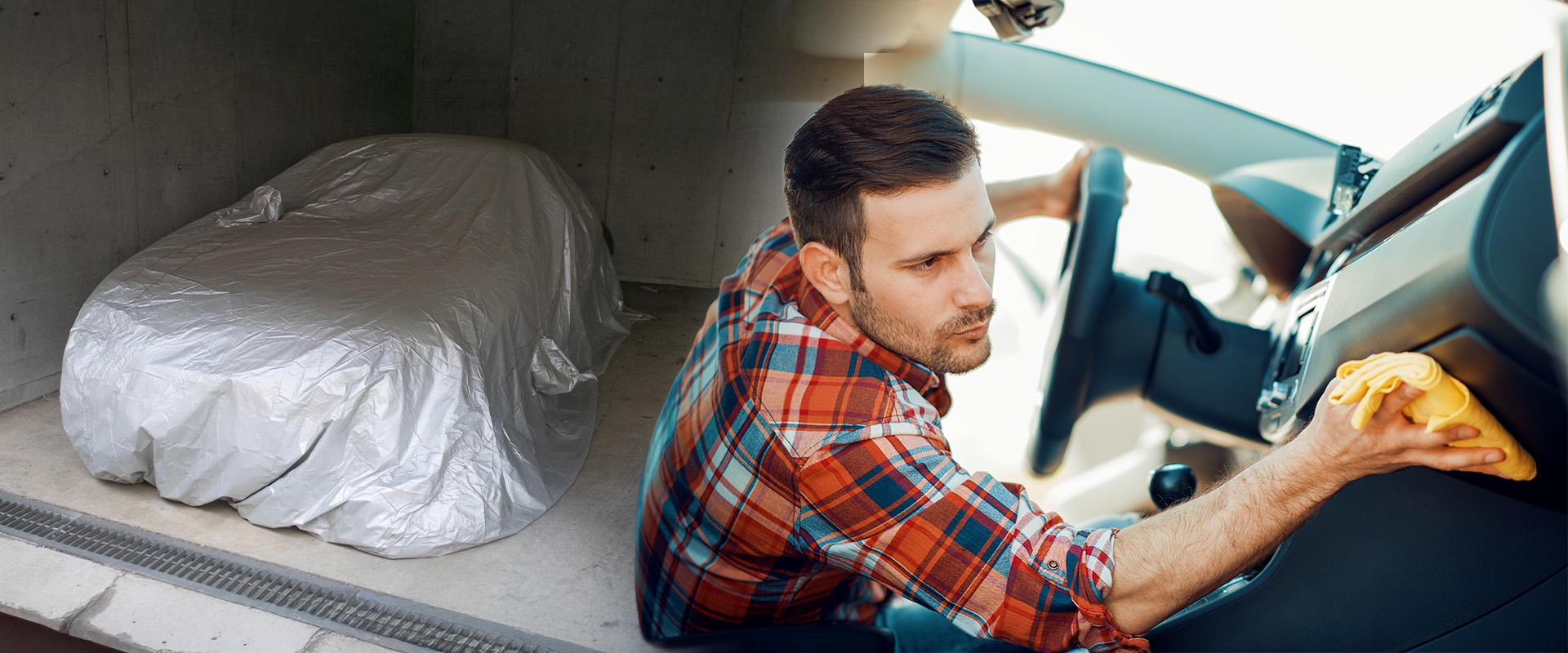
Start with a thorough car wash to remove dirt and road salt from the wheel wells, garage door areas, door hinges, and undercarriage. Apply wax for extra protection. Clean the passenger compartment, remove food, and vacuum thoroughly. Place silica gel, dryer sheets, or mothballs inside to help prevent moisture buildup and odors.
Seal the exhaust pipe and tailpipe with steel wool to prevent rodent damage. Check all entry points around the engine compartment.
Prepare the Engine and Fluids
An oil change using fresh oil is essential. Old engine oil contains contaminants that can cause damage over a long period. Check brake fluid, power steering, engine coolant, windshield washer fluid, and coolant levels in the cooling system.
Fill the fuel tank and add a fuel stabilizer to extend shelf life and protect fuel lines and the fuel system. Run the engine to operating temperature so the stabilizer circulates fully. A short engine run helps prevent internal corrosion.
Inspect spark plugs and replace a dirty air filter to ensure proper air circulation during storage.
Care of the Battery
Disconnect the car battery or use a battery maintainer to preserve battery charge during winter storage. Clean battery terminals and perform a quick check before storage. This step is especially important during winter months when cold weather accelerates battery drain.
Choosing a Secure Winter Storage Option
If you’re storing a car over winter outdoors, location and security matter. Avoid leaving your vehicle in a driveway or unsecured area for a long time. Look for storage solutions that offer gated access, surveillance, and a clearly defined parking space.
Armored Self Storage provides secure winter vehicle storage at our facilities in Easton, MD, and Queenstown, MD. While indoor storage is often discussed in winter car storage guides, Armored Self Storage specializes in long-term outdoor vehicle storage, ideal for cars, trucks, trailers, and recreational vehicles during an extended period of time.
Our lots are well-maintained, monitored, and designed for long-term parking, offering peace of mind without the need for garage space at home.
Common Winter Car Storage Mistakes to Avoid
- Skipping an oil change before storage
- Forgetting fuel stabilizer in the fuel tank
- Leaving the parking brake engaged instead of using wheel chocks
- Ignoring rodent prevention steps
- Storing on a concrete floor without a moisture barrier
- Letting tire pressure drop too low
- Forgetting to review auto insurance or check with insurance companies about storage coverage
Prepare Your Vehicle for Winter Storage Today
Learning how to winterize your car for storage is the best way to protect your vehicle during the winter months. From proper cleaning and fluid checks to battery care and choosing the right winter vehicle storage option, each step helps prevent damage and ensures your car remains in pristine condition until warmer weather returns.
For reliable winter auto storage on Maryland’s Eastern Shore, Armored Self Storage offers secure long-term outdoor parking solutions in Easton and Queenstown, MD. With strong security, convenient access, and easy online reservations using your email address, storing your car over winter doesn’t have to be complicated.
Good luck with your storage preparation—and enjoy a smooth first drive when spring arrives.